
Irrigation

Yongagri: A Global Innovation Leader in Precision Agriculture

Precision Agriculture – The Core Challenge

The global food system is tasked with sustaining a population that is anticipated to increase from the current 8.5 billion to nearly 12 billion by the year 2060. This gives rise to a range of critical challenges, notably the efficient utilization of irrigation water and the mitigation of gaseous emissions from livestock operations.This translates into different challenges, such as the proper use of irrigation water and the control of gas emissions from livestock.

Our services

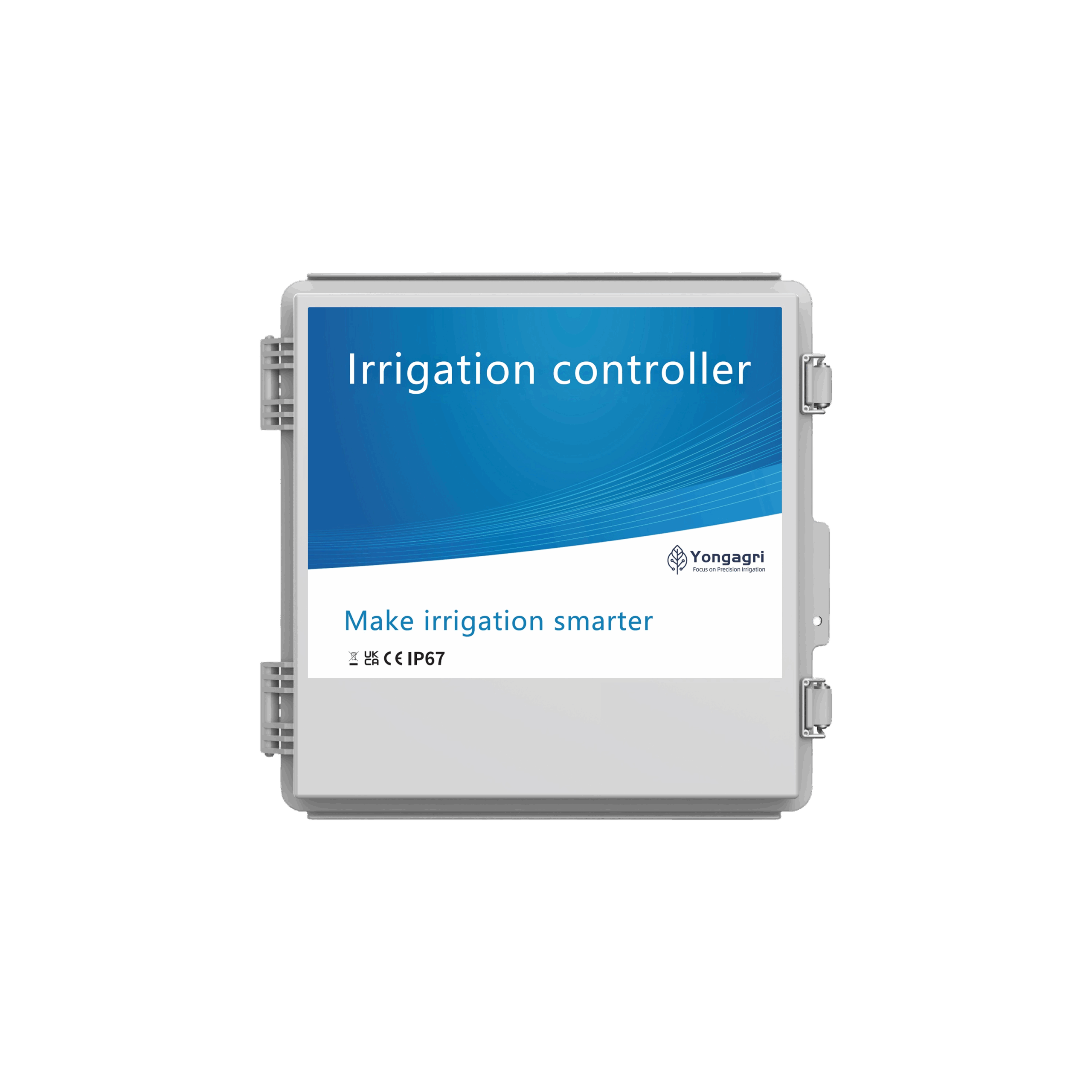
Irrigation controller with built-in gateway

Precision Irrigation Transforms Agriculture: Four Key Aspects

• Size: 230mm230mm100mm
• Communication method: 4G/WIFI
• Control output: 24V pulse output
• Power supply: 220VAC
• Supports connection to rain sensor
• Supports connection to the weather station
• Supports irrigation programs: up to 5 programs
• Supports water pump and fertilization pump functions
• Supports external solar panels or DC power, suitable for various environments
• Supports remote start function for the vast majority of motor starter cabinets
• Supports pressure sensors: 10
• Support motor start-up detection
• Communication distance with the decoder: up to 6 kilometers
• Support irrigation based on soil moisture
• Control Valves: 4-Station / 8-Station / 12-Station / 16-Station / 24-Station,with a maximum of 255 irrigation zones

For Greenhouses

The primary challenge faced by greenhouse managers in ensuring product quality and production efficiency is the balancing act between optimizing growing conditions and minimizing resource usage. This includes maintaining ideal temperature, humidity, and light levels to produce high-quality crops while reducing water, energy, and labour costs.
Precise control of irrigation and fertilization systems, optimizing water and nutrient usage and reducing waste
Monitoring of environmental conditions to help ensure optimal conditions for plant growth and product ripening
Early detection of pest and disease outbreaks, allowing for targeted treatment and preventing crop loss

For Open Field

The primary challenge faced by open field farmers in ensuring product quality and production efficiency is managing the unpredictability of weather conditions and environmental factors. Farmers must contend with varying rainfall, temperature fluctuations, and extreme weather events, which can significantly impact crop yield and quality. They must also implement sustainable practices to manage soil health, water usage, and pest control while minimizing costs.

Environmental parameters monitoring: IoT sensors can continuously monitor environmental factors such as rainfall, solar radiation, and wind direction. This data can help farmers make informed decisions regarding planting, irrigation, and crop protection measures.
Irrigation optimization: IoT sensors can monitor soil moisture levels and weather conditions in real-time, enabling farmers to optimize irrigation schedules and use water efficiently. This not only conserves water resources but also ensures that crops receive the right amount of water for optimal growth.
Crop prediction: By collecting data on environmental conditions, such as temperature, humidity, and rainfall, IoT technology can assist farmers in predicting crop development stages and yield potential. These predictions allow for better planning and decision-making regarding harvesting, marketing, and resource allocation.

get started

Let’s Build Sustainable Farms Together